
RoRD Initial Report: An AI Path for Layout Template Recognition
Jun 9, 2025
An AI Path for Layout Template Recognition
This report explores RoRD’s rotation robustness and zero-shot matching potential, and analyzes how it can address the core challenges in IC layout analysis: scarce data, geometric variation, dynamic extensibility, and structural complexity.
The goal is to develop and validate an AI layout analysis engine that can support design-technology co-optimization (DTCO). Based on RoRD’s rotation-robust feature matching, the system should rapidly and accurately decompose IC layouts, identify standard cells, IP blocks, and critical geometric patterns, and help connect design-side GDSII information with process-side manufacturing feedback.
Project Goal: Supporting DTCO
This project positions AI layout analysis as a key component in advanced process-node development, providing technical support for better PPA targets: power, performance, and area.
Core Objective
The core objective is to build an AI layout analysis engine for DTCO. It needs to do three things:
- Quickly locate standard cells, IP blocks, and critical layout patterns in large-scale layouts.
- Keep matching stable under template rotation, mirroring, and scale variation.
- Connect design-side structure information with process-side yield, hotspot, and manufacturing feedback.
Four Directions For DTCO
| Direction | Role |
|---|---|
| Design-process co-optimization | Process engineers can analyze cell usage and layout patterns to optimize DRC and PDK rules, while design engineers can receive faster feedback on manufacturability. |
| PPA evaluation and convergence | Full-chip standard-cell and IP recognition enables area calculation, cell-density analysis, and routing-congestion estimation, accelerating design convergence. |
| DFM and yield analysis | The method can be extended to identify known yield detractors or hotspots, allowing risky patterns to be detected during design. |
| IP reuse and verification | The tool can verify whether IP blocks in the final layout match expectations, supporting reliable IP reuse in advanced nodes. |
Core Challenges In Layout Recognition
Applying AI to layout analysis is not straightforward. Efficient and accurate template recognition must first address the following problems.
| Challenge | Description |
|---|---|
| Data scarcity | Supervised learning requires large amounts of fine-grained labeled data, but pixel-level or bounding-box annotations are expensive in layout domains. |
| Geometric variation | IC layouts commonly involve 8 orientations: 0, 90, 180, and 270 degree rotations, plus horizontal or vertical mirroring under these rotations. Models must be robust to all of them. |
| Dynamic extensibility | IP and standard-cell libraries are large and frequently updated, so a practical method should adapt to new templates without repeated retraining. |
| Structural complexity | IC layouts contain dense, fine-grained geometric patterns and hierarchical structures, placing high demands on feature representation. |
RoRD Deep Dive: Why This Method?
RoRD, or Rotation-Robust Descriptors and Orthographic Views for Local Feature Matching, proposes a local feature matching framework that combines rotation-robust descriptors, orthographic view generation, and correspondence integration to handle extreme viewpoint changes.
The rotation homography can be written as:
Component 1: Orthographic View Generation
RoRD uses orthographic views to increase visual overlap and improve matching, but orthographic views alone are not enough for extreme viewpoint changes. Rotation-robust features are still required. This step transforms perspective images into normalized top-down views for later feature extraction.
The main implementation paths are:
- Surface-normal based generation: depth information is used to build a 3D point cloud, estimate the dominant plane normal, and generate an orthographic view.
- Inverse perspective mapping (IPM): suitable for scenarios with consistent scene geometry, where a fixed homography converts camera images into bird’s-eye-view images.
Component 2: Rotation-Robust Descriptor Learning
This is the key part of RoRD’s rotation invariance. The objective is to learn local descriptors that remain stable and discriminative even when the image undergoes in-plane rotation.
Key techniques include:
- Data augmentation: random in-plane rotation homographies are applied during training, where is uniformly sampled from 0 to 360 degrees.
- Architecture and training: the implementation is based on D2-Net’s joint detection-and-description framework, using VGG-16 as the backbone and mainly fine-tuning descriptor layers.
- Learning objective: descriptors extracted from original image patches and their geometrically transformed counterparts are encouraged to stay close in feature space.
Component 3: Correspondence Integration And Filtering
RoRD further improves matching quality by integrating correspondences and using RANSAC for geometric verification.
The matching process can be summarized as:
- Dual-head D2-Net: one head is trained like the original D2-Net, while the other is trained with rotation-augmented data.
- Independent matching and merging: both heads detect keypoints, compute descriptors, and establish initial correspondences using mutual nearest neighbor (MNN) matching.
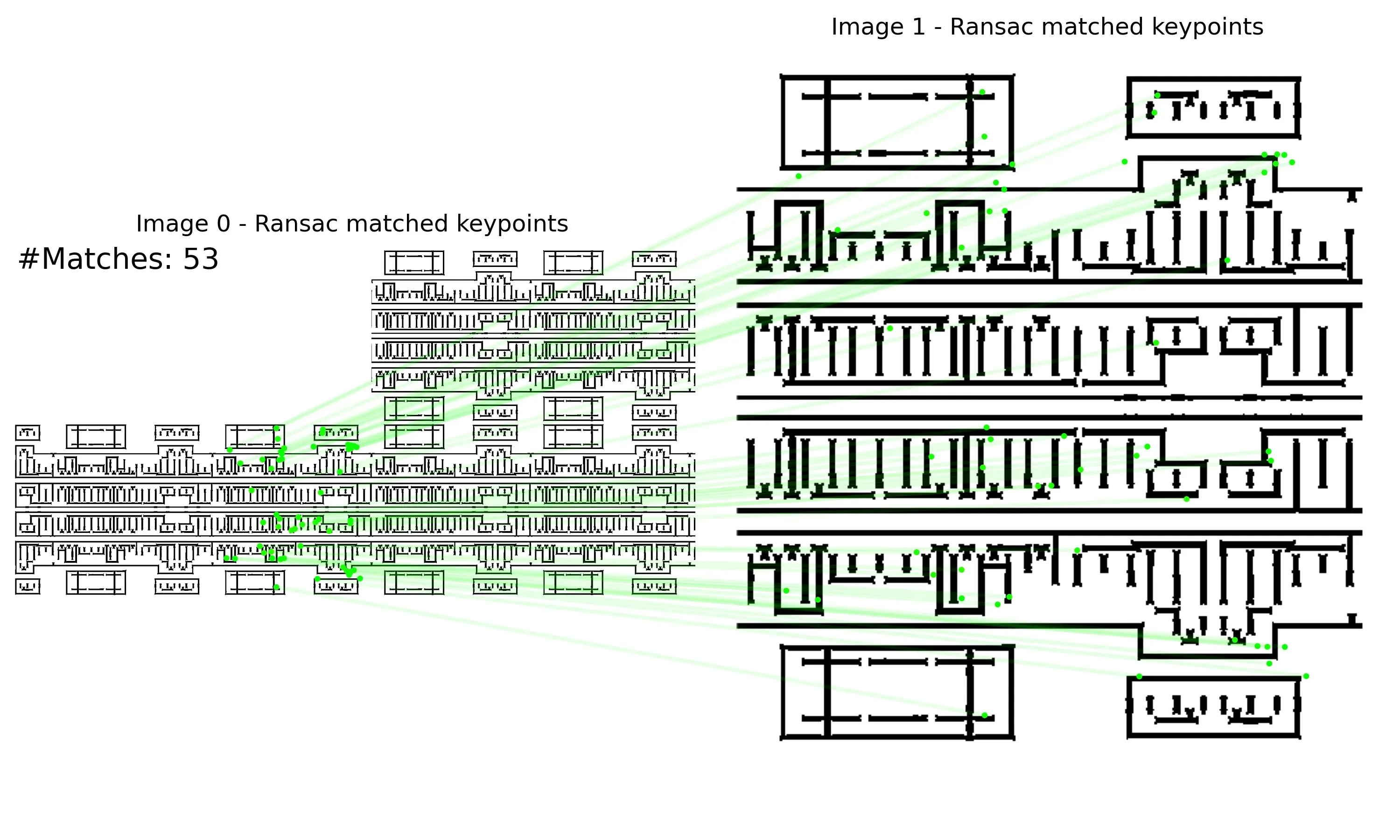
- RANSAC geometric verification: outliers are filtered from the merged correspondence set, leaving geometrically consistent matches.
By combining orthographic view generation, rotation-robust feature learning, and correspondence integration, RoRD significantly improves local feature matching under extreme viewpoint changes, especially rotation.
AI Method Comparison
The original report used interactive tabs. In this Markdown version, the same comparison is represented as static tables, which keeps the content compatible with the existing blog renderer.
| Method | Core principle | Strength for layout recognition | Main challenge | New-template adaptation | Rotation robustness |
|---|---|---|---|---|---|
| U-Net | Semantic segmentation | Accurate pixel-level contours | Very expensive labels; hard to distinguish multiple instances of the same class | Poor; retraining needed | Low |
| YOLO | Object detection | Fast detection for counting and localization | Dense small targets, class explosion, limited box representation | Poor; retraining needed | Low to medium |
| Transformer / ViT | Global self-attention | Strong global context modeling | Huge data demand and high computational cost | Medium; depends on pretraining and fine-tuning | Medium |
| SuperPoint | Self-supervised local features | Reduces annotation needs and adapts better to new templates | Sparse textures, repeated structures, and extreme rotations remain difficult | Good | Medium to high |
| RoRD | Rotation-robust local features | Rotation robust, with zero-shot and few-shot potential | Large-scale matching efficiency still needs optimization | Excellent | Very high |
Method Flow Summary
| Method | Flow |
|---|---|
| U-Net | Input image -> encoder -> decoder -> segmentation mask |
| YOLO | Input image -> backbone -> feature fusion -> bounding boxes and classes |
| ViT | Input image -> image patches -> Transformer encoder -> classification or feature representation |
| SuperPoint | Input image -> interest-point detection -> descriptor computation -> feature matching |
| RoRD | Image pair -> rotation-robust descriptors -> correspondence integration -> RANSAC filtering |
Adapting RoRD For IC Layouts
The original RoRD targets real-world 3D scene images. To apply it to IC layout recognition, the model should be adapted to the unique properties of layout data.
1. Remove Orthographic View Generation
In the original RoRD pipeline, orthographic view generation corrects perspective distortion from camera viewpoints and converts oblique 3D scene views into 2D top-down views. IC layout data, such as GDSII and OASIS, is already precise 2D geometric vector data without perspective distortion.
Therefore, for IC layouts, the orthographic view generation component can be removed. Rasterized layout images can be fed directly into the model, simplifying the pipeline and avoiding unnecessary computation and interpolation artifacts.
2. Adapt To Sparse And Binary Features
IC layout images are usually binary, sparse, and filled with repeated geometric structures. Unlike natural images, they lack rich color and texture, which challenges feature extractors pretrained on natural images.
Adaptation strategies:
- Focus on corner features: key layout information is concentrated around polygon vertices and edges, so the detector should respond strongly to geometric corners.
- Use layout-specific augmentation: color and lighting augmentation should be replaced by geometric augmentation such as rotation, scaling, and mirroring.
- Learn geometric descriptors: the descriptor should learn local geometric configurations rather than texture.
3. Introduce Multi-Scale Matching
In real applications, templates and full layouts can differ drastically in size. A template may be only a few hundred pixels wide, while a full layout can reach hundreds of thousands of pixels. Direct matching is impractical.
Three strategies can be used:
- Sliding windows for large layouts: extract features from fixed-size windows and map them back into global layout coordinates.
- Template image pyramids: scale the template to multiple sizes and match each scale against the layout feature cloud.
- Scale jittering during training: randomly scale inputs during training so descriptors become more robust to small scale changes.
The combination of sliding windows, image pyramids, and scale jittering allows RoRD to search for templates of unknown size in arbitrarily large layouts, making the approach closer to real layout-recognition scenarios.
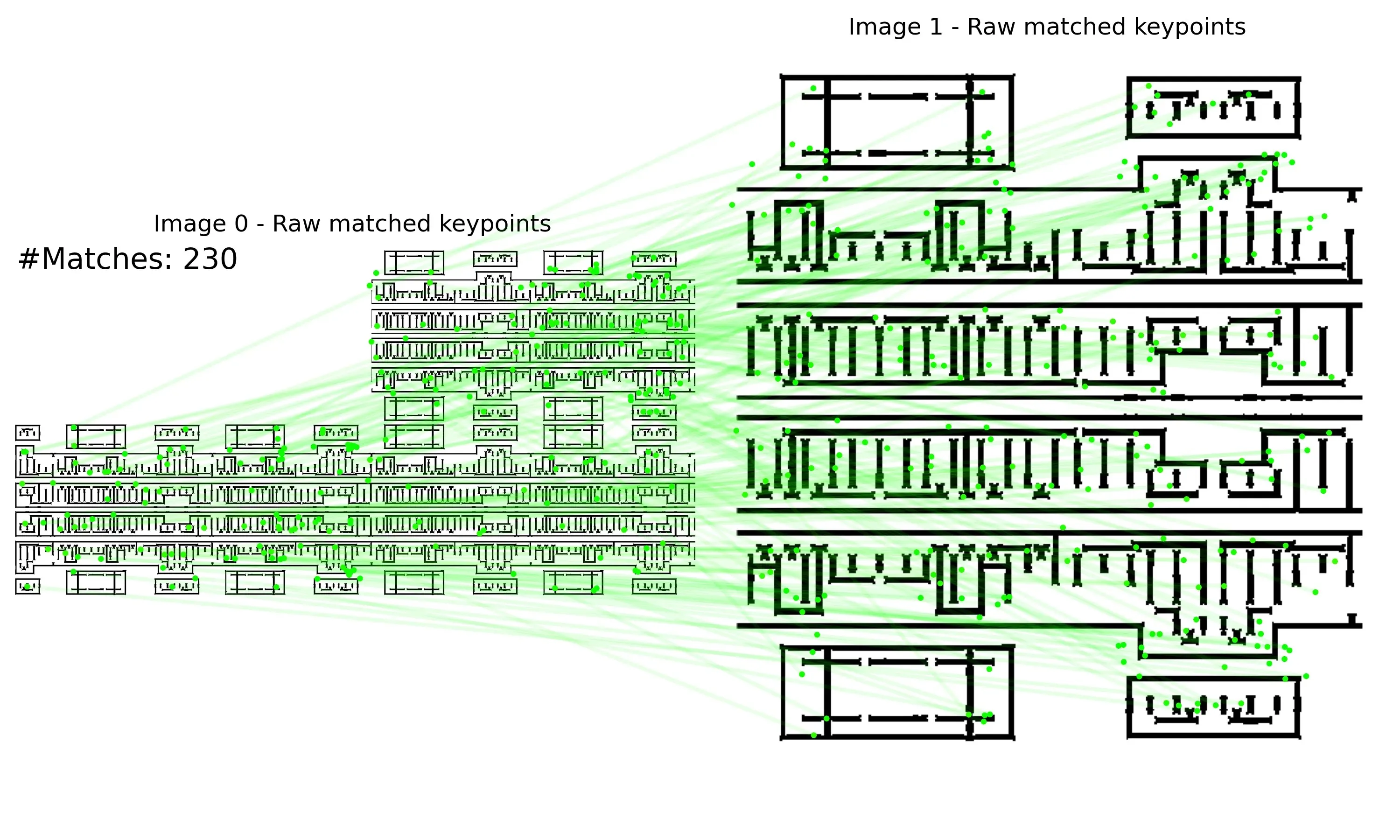
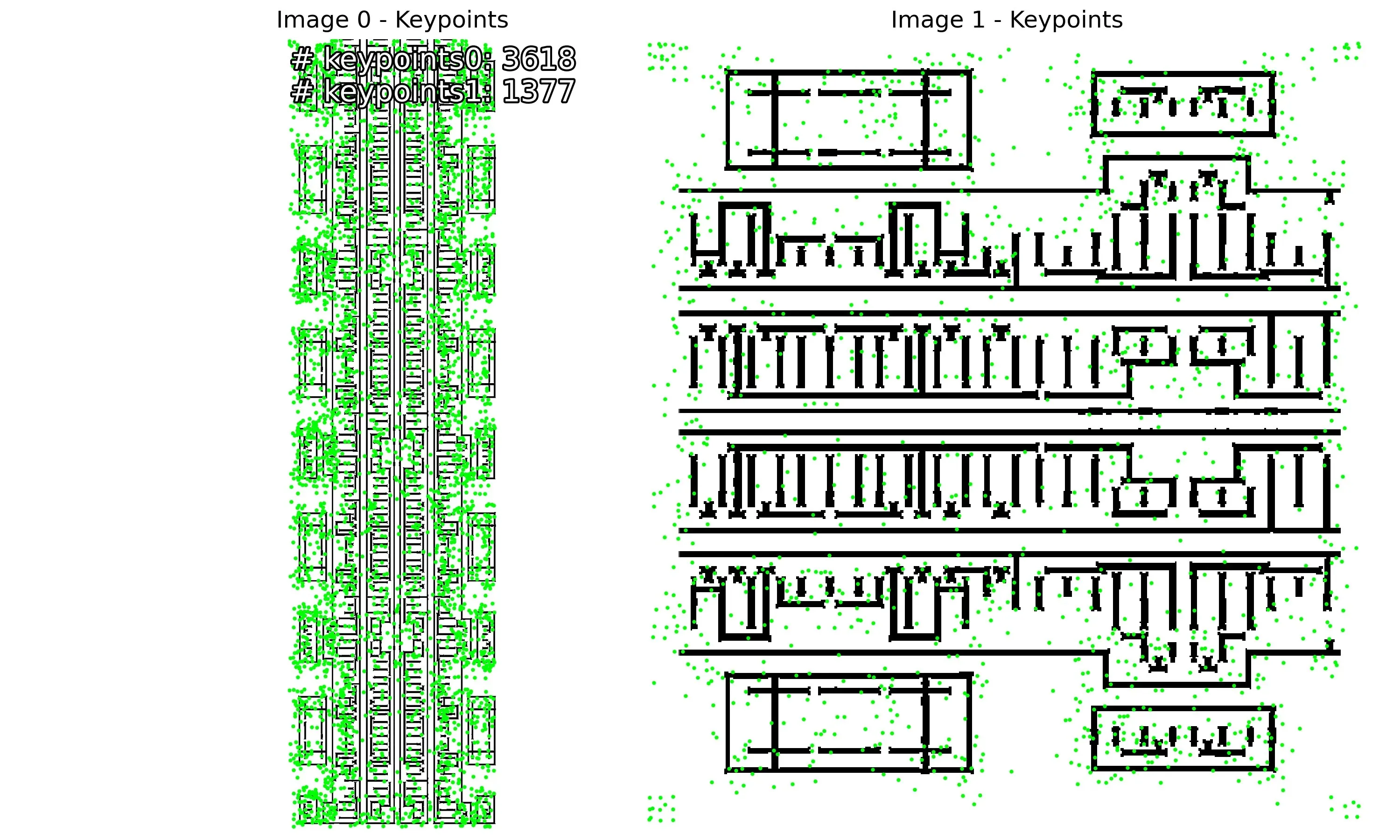
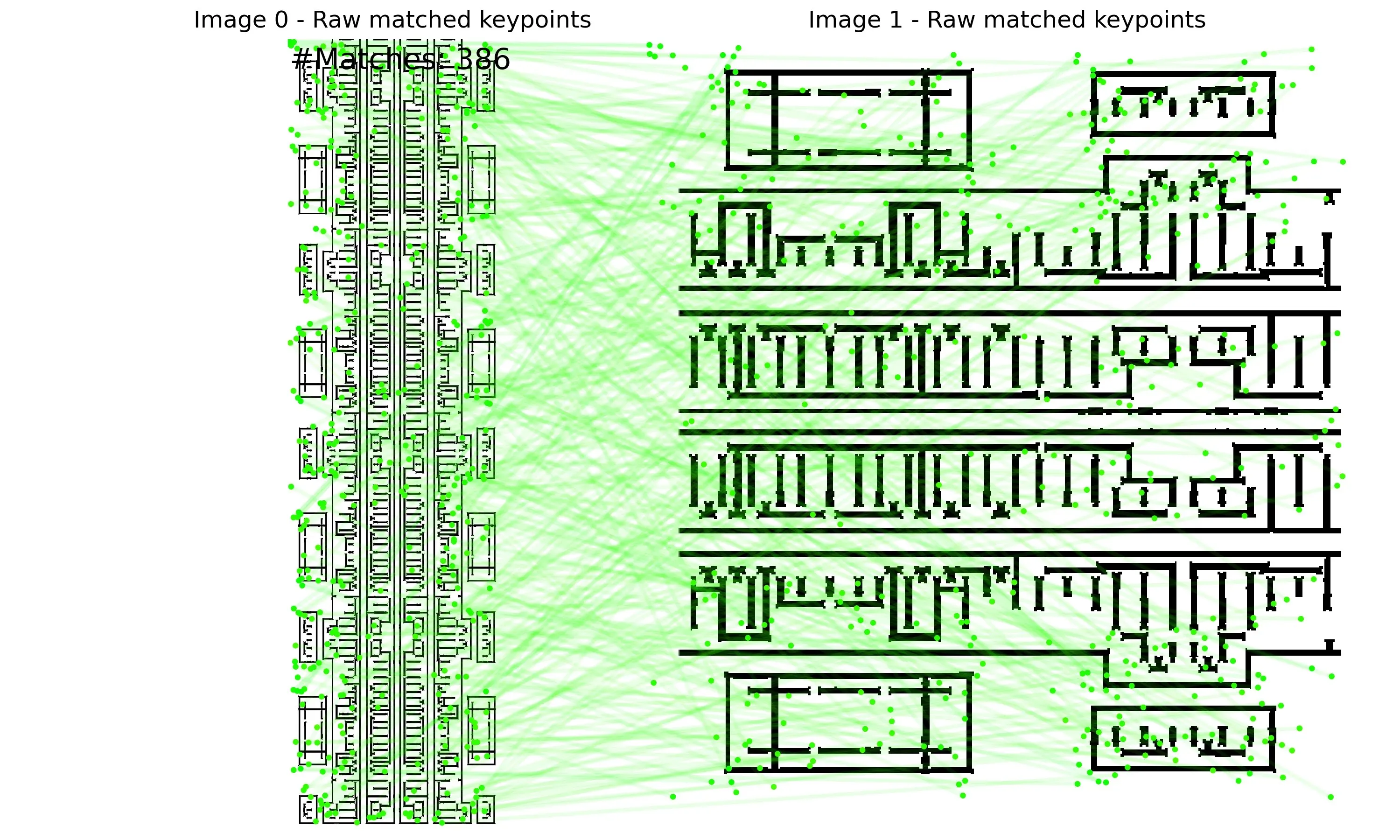
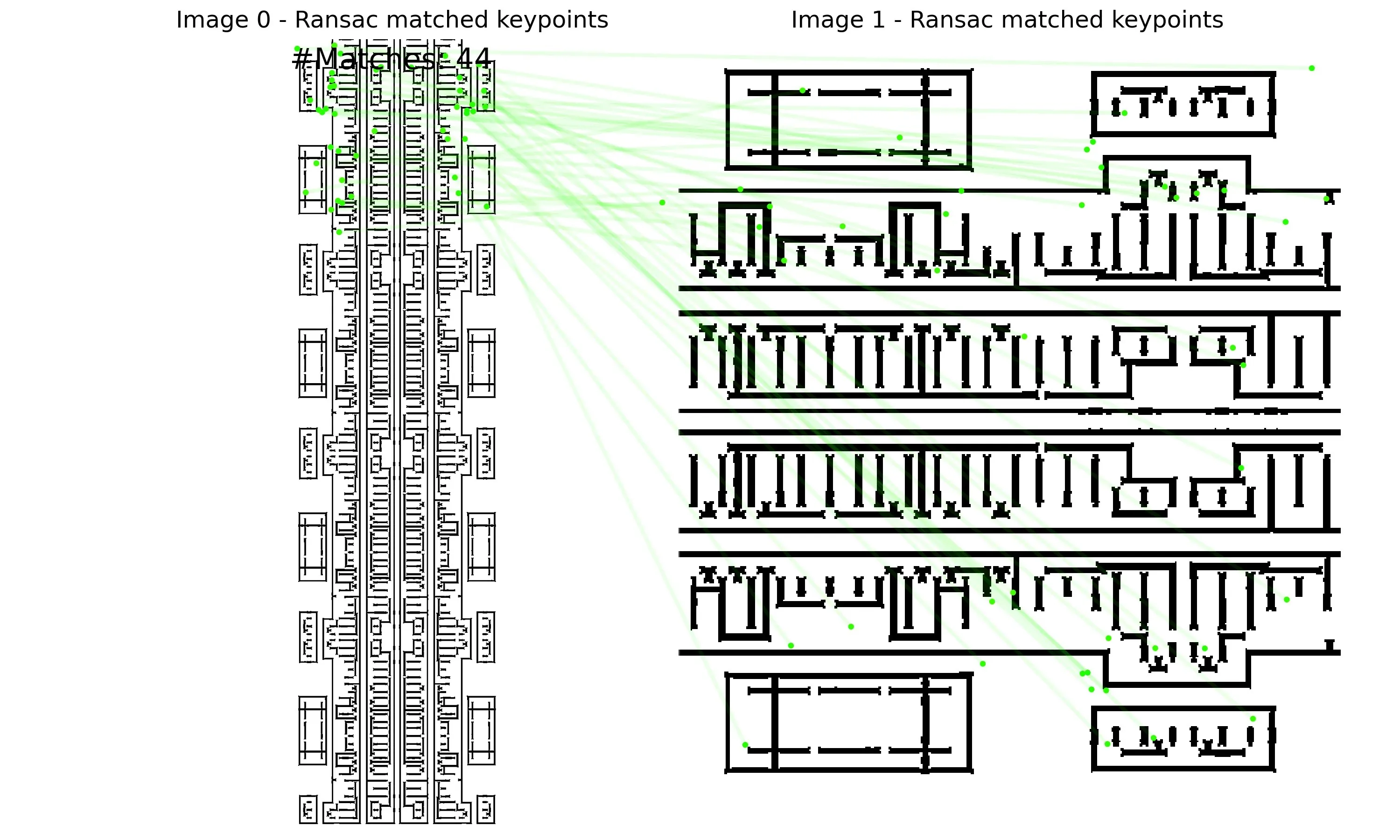
Initial Experiments
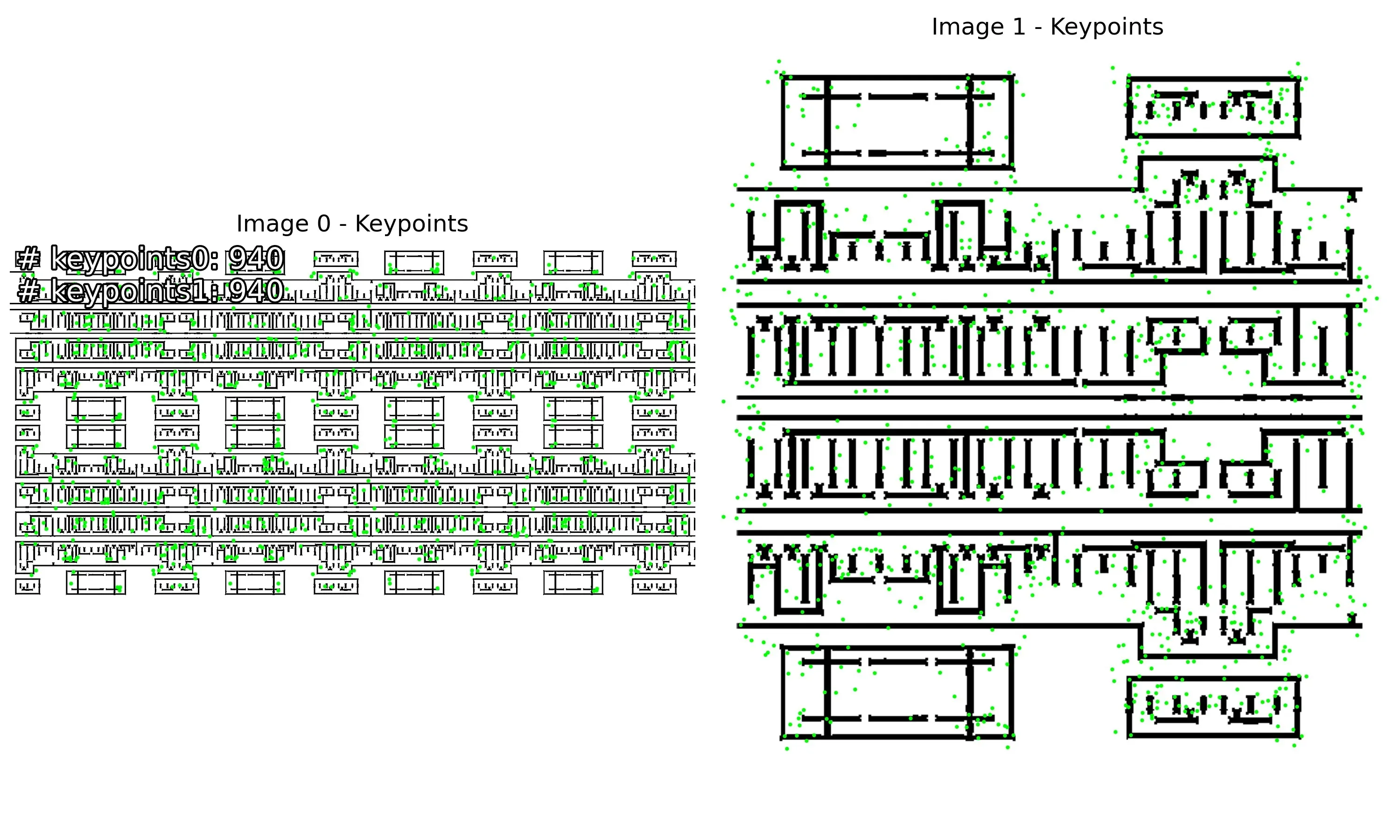
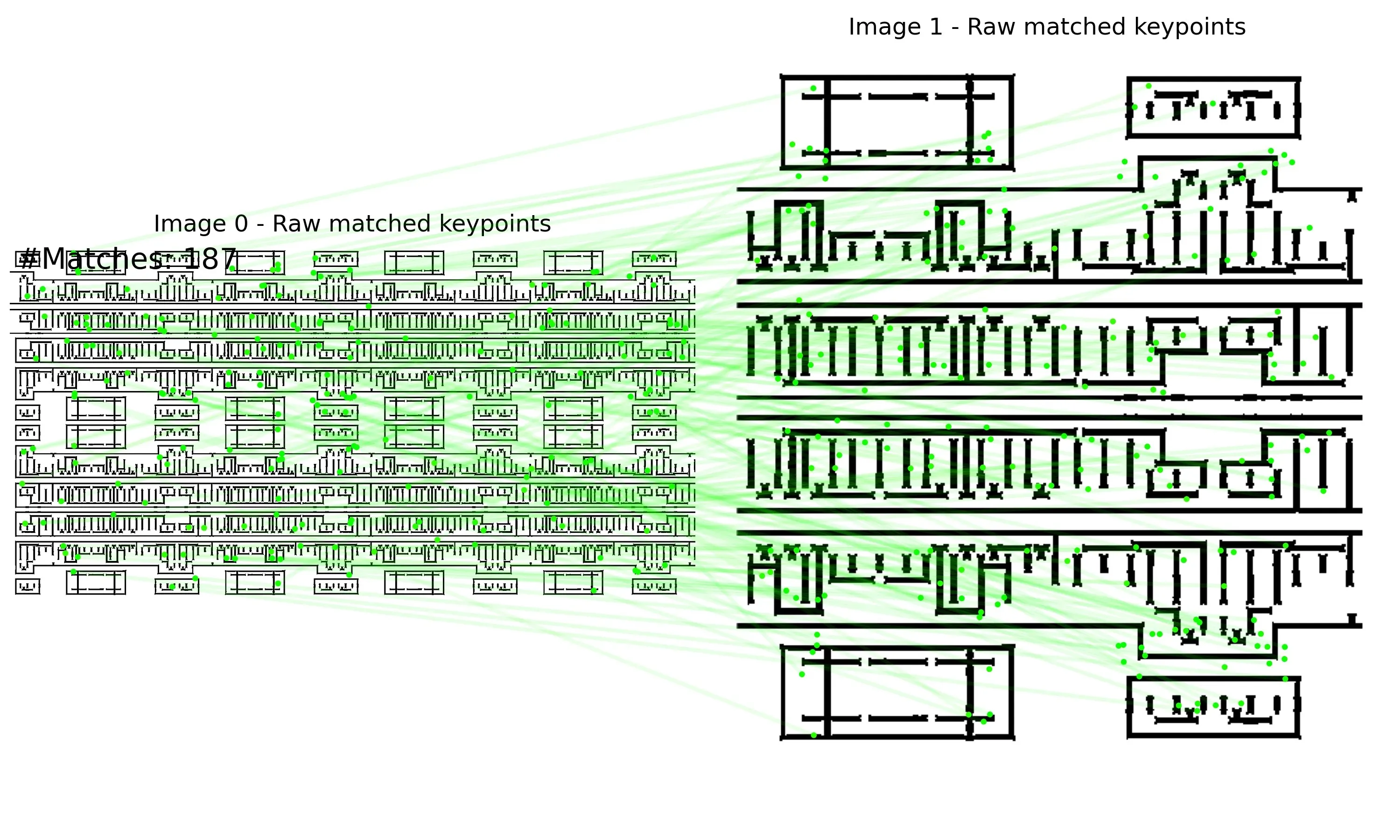
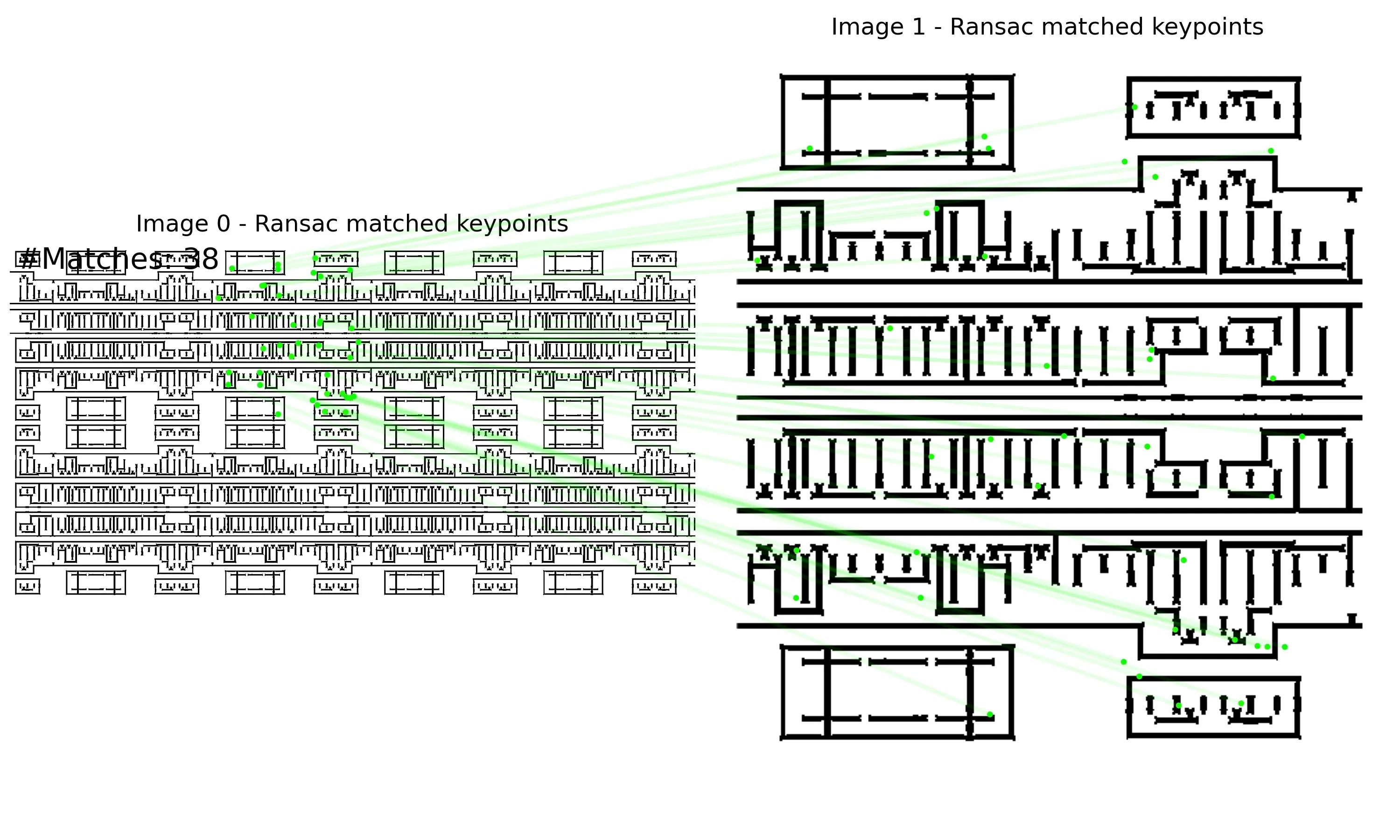
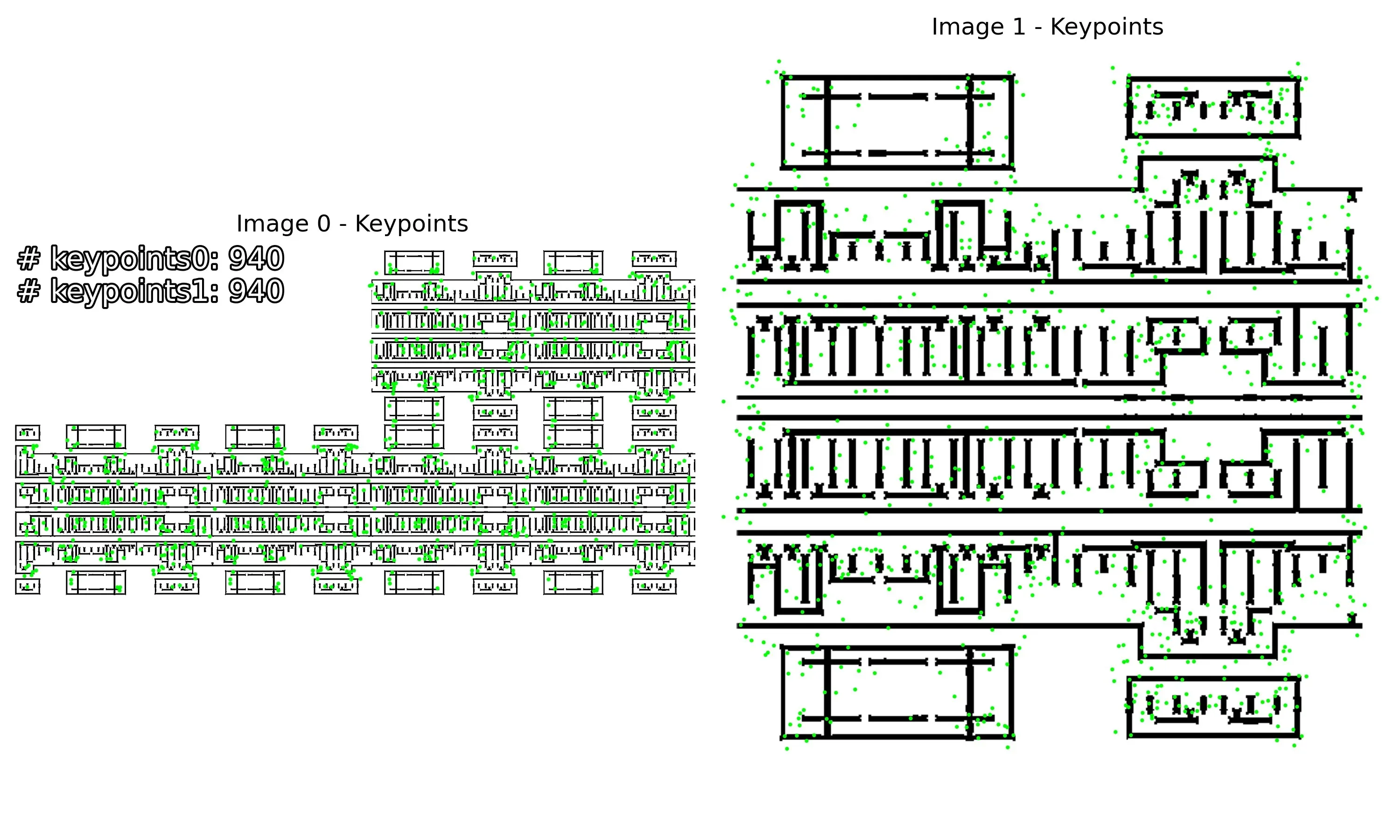
The following are three groups of RoRD-based IC layout matching examples.
| keypoints | raw-match | RANSAC-match |
|---|---|---|
 |  |  |
 |  |  |
 |  |  |
Applications And Future Work
Future Priorities
- Model optimization: further adapt the RoRD architecture and training strategy to sparse, binary layout data.
- Better discriminability: investigate new loss functions to improve descriptors in highly repeated structures such as memory arrays.
- Large-scale matching acceleration: implement and optimize approximate nearest neighbor (ANN) search for massive template libraries.
- End-to-end system integration: integrate RoRD into a complete layout analysis pipeline for circuit analysis and defect diagnosis.
Project Timeline
| Milestone | Goal |
|---|---|
| Before July 2025 | Complete IC-layout-specific RoRD implementation and initial debugging. |
| Before February 2026 | Complete private dataset annotation and full model training and validation. |
| Before June 2026 | Optimize performance, refactor code, write the paper, and attempt submission. |
Summary
For IC layout template recognition, RoRD’s value is not in directly reusing every module from the original visual-scene pipeline. Its real value lies in rotation-robust local feature learning. For layout tasks, the rotation-robust descriptor and geometric verification framework should be retained, while unnecessary orthographic view generation should be removed. The training and matching pipeline should then be redesigned around the binary, sparse, repetitive, and multi-scale nature of IC layouts.
Loading comments...